Showcasing the African Bioinformatics Institute at the DS-I Africa Consortium Meeting
On 28 August 2025, the African Bioinformatics Institute (ABI) held a showcase session at the 5th Annual DS-I Africa Consortium Meeting, hosted at the CEDI Conference Centre at the University of Ghana in Accra. The session provided an opportunity to share updates on the ABI’s vision and activities, and to engage the community in shaping its future direction.
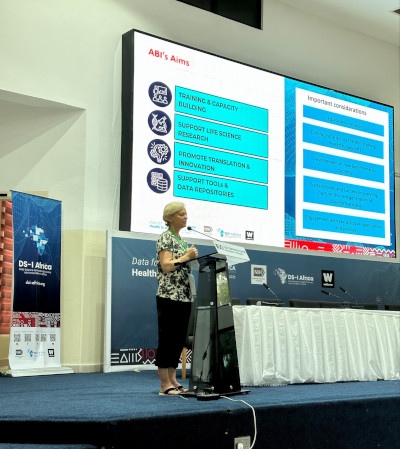
The session was opened by Prof. Nicky Mulder, interim ABI Director, who outlined the ABI’s mission to strengthen bioinformatics across Africa through research, training, service provision, and infrastructure capacity development. Central to this vision is a distributed model: the ABI will be hosted across sites at African institutions, coordinated by a central hub, ensuring that capacity and expertise are built where they are most needed.
Prof Mulder also highlighted the different ways individuals and institutions can get involved. The first call for Group Leaders is open, inviting senior bioinformatics researchers based in Africa to apply. Successful applicants will not only join a growing pan-African network but will also establish their institutions as official ABI sites. In the future, additional calls will open for Associate Group Leaders and Fellows, providing support for emerging bioinformatics researchers and building the next generation of leaders. Bioinformatics champions at sites wishing to develop new bioinformatics capacity will have the opportunity to join as emerging sites. Communities of Practice (CoPs) have been established and plans are also underway for student forums and affiliate membership, providing multiple pathways for engagement.
Training is a core part of the ABI’s mission. Prof. Mulder described the work of the interim Training Working Group, which is developing a training framework and planning the first ABI Summer School. By offering structured opportunities for skills development, mentoring, and networking, the ABI aims to address current gaps in expertise and help build a sustainable bioinformatics workforce.
The second half of the session moved into engagement, with an icebreaker poll followed by four themed Mentimeter surveys designed to capture participants’ perspectives on priority challenges and opportunities. The icebreaker poll highlighted that the biggest challenge for many was access to training and skills development, while the resources they most hoped to gain from the ABI included curated, African-relevant datasets and a software toolkit for common workflows. Subsequent thematic polls further underscored community priorities: AI was seen as a useful tool to support development but not a replacement for core bioinformatics expertise, with outputs requiring human interpretation and contextualisation. On workforce issues, participants stressed the pressing need to retain skilled professionals in Africa by creating career pathways and opportunities that incentivise them to stay. When it came to data sharing, there was strong support for federated approaches that maintain data sovereignty, alongside a call for funders to mandate FAIRification to accelerate adoption and increase data reuse.
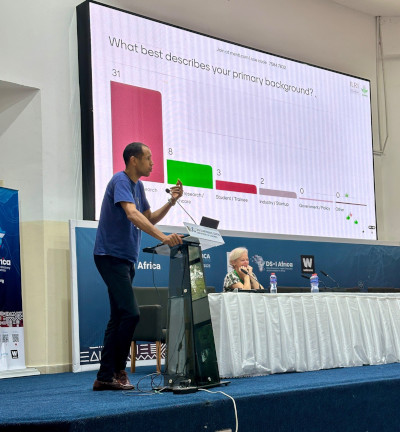
the interactive poll discussions.
These perspectives underscored both the opportunities and challenges ahead for ABI. While the Institute is still in its formative stages, the discussions provided a valuable snapshot of community priorities, which will help inform ongoing development. By listening to stakeholders and building solutions together, the ABI can ensure that its activities remain relevant, practical, and impactful for African researchers and institutions.
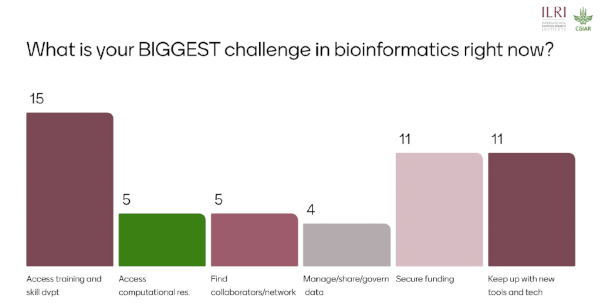
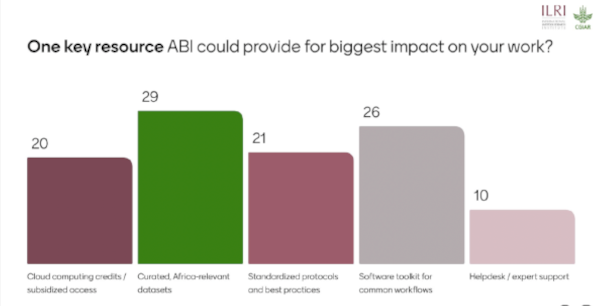
Icebreaker insights: Mentimeter results from participants at the ABI showcase
The showcase session closed with a strong sense of momentum: ABI is not just an idea on paper but a growing, collaborative effort that is already taking shape. The call for Group Leaders marks an important milestone, creating opportunities for institutions across the continent to join the network and contribute to a stronger bioinformatics ecosystem.
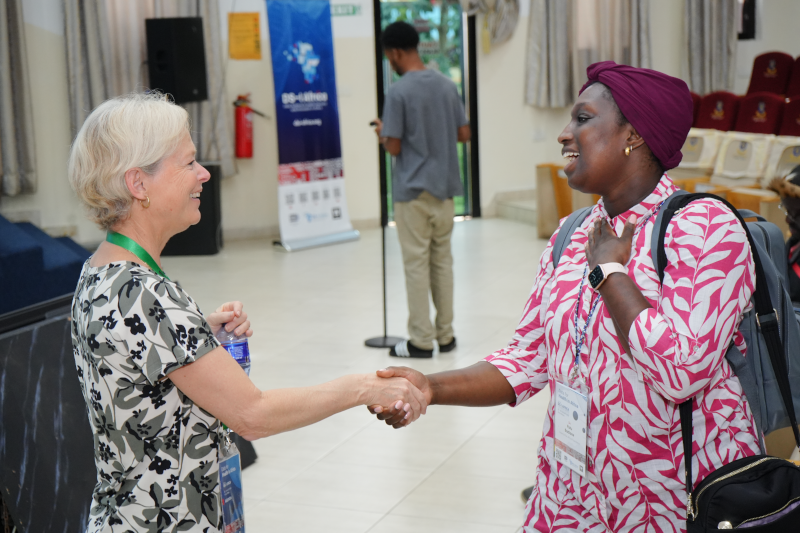
Prof. Nicky Mulder (left) and Dr. Fatu Badiane in conversation following the ABI Showcase Session.
Applications for ABI Group Leaders are now open. Senior scientists leading independent bioinformatics groups in Africa are invited to apply Here.