Guest Speakers
19th Annual International Biocuration Conference
20 to 24 April 2026 in Cape Town, South Africa

Biocuration2026 is proud to host the following Guest Speakers at the upcoming 19th Annual International Biocuration Conference, recognised for the leading efforts and contributions in the field.
Keynote Speakers
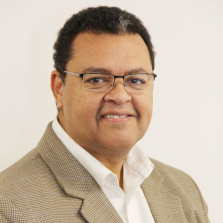
Prof Alan Christoffels is a South African bioinformatics scientist and academic who serves as Director of the South African National Bioinformatics Institute (SANBI) at the University of the Western Cape and as Director of the SA MRC Bioinformatics Unit. He holds a DSI/NRF Research Chair in Bioinformatics and Health Genomics and is internationally recognised for his leadership in pathogen genomics, infectious disease research and computational analysis of high-throughput sequencing data. His work focuses on developing tools and methods for analysing genomic data in public health, including platforms like COMBAT-TB and Baobab LIMS, and he has played a central role in strengthening genomic surveillance and data systems across Africa, including senior advisory roles with the Africa CDC and leading the Public Health Alliance for Genomic Epidemiology.
Prof Alan Christofels
South African National Bioinformatics Institute (SANBI)
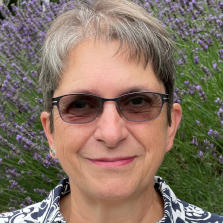
Ruth Lovering has been an active member of the biocuration community for over 25 years, significantly raising the profile of biocuration and bioinformatics as a Professor at University College London (UCL). Ruth has contributed extensively to the curation of key resources such as HGNC, Gene Ontology (GO), and IMEx, and has been instrumental in developing GO curation standards, notably pioneering the functional annotation of microRNAs and contributing to guidelines for transcription factors with the GREEKC Consortium. Ruth established the Functional Gene Annotation group at UCL in 2008, securing funding for cardiovascular, neurological, and microRNA annotation projects, and collaborating widely beyond her home department. Her team provided a significant proportion of human GO annotations, which led to numerous publications and real-world applications. Ruth has continued to maintain UCL's GO annotations since her retirement. In addition, Ruth undertook several outreach approaches to highlight the value of biocuration, by providing multiple bioinformatics workshops for researchers, as well as running a popular bioinformatics MSc course and securing funding from disease-specific charities. She is deeply committed to education and mentorship, supporting MSc students in gaining authorships, and actively encouraging biocurators to pursue career advancement, teaching qualifications, and publications.
Prof Ruth Lovering
University College London
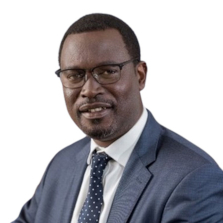
Dr Motshegwa is the Director of the African Open Science Platform (AOSP) with the strategic portfolio to direct and support the AOSP in its mandate to advance, coordinate and amplify impact of open science in Africa. AOSP also aims to position African scientists at the cutting edge of data intensive science. Dr Motshegwa has a Ph.D. in Computer Science from City, University Of London, UK at the School of Mathematics, Computer Science and Engineering. Through its mandate AOSP seeks to 1. Drive alignment, collaboration, and cooperation between existing initiatives 2. Identify critical gaps and set priorities for action 3. Design and deliver activities to respond to those gaps/ priorities 4. Mobilise existing and resource new initiatives in pursuit of the Platform's aims 5. Enhance communication, outreach and advocacy. AOSP Operations (engaging with stakeholders) encompass advancing 1. A federated e-infrastructure, cyberinfrastructure support for OS 2. Policies, practices, tools of research data management 3. A Data Science and AI Institute in support of platform's priorities 4. Programme delivery 5. Science programmes (Collaborative project as conduit to advancing OS) 6. Education and skills programmes 7. Societal engagement and Open Science dialogue.
Dr Tshiamo Motshegwa
African Open Science Platform (AOSP)
Invited Speakers
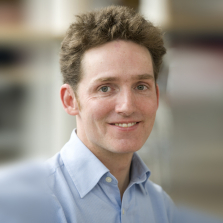
Dr Alex Bateman is a computational biologist and Senior Team Leader at European Bioinformatics Institute (EMBL-EBI), where he heads Protein Sequence Resources. He is internationally recognised for leading and developing some of the most important biological databases used in genomics and proteomics. His work has focused on organising, classifying and annotating protein and RNA sequences to make them accessible and useful to researchers worldwide. Dr Bateman has played key roles in major resources including UniProt, Pfam, Rfam, InterPro and RNAcentral. Through these initiatives, he has significantly shaped global bioinformatics infrastructure, promoting open data and enabling scientists to interpret biological sequence information at scale.
Dr Alex Bateman
EMBL-EBI
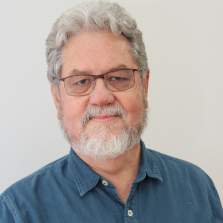
He is a faculty member and the Director of Science at the Africa Health Research Institute. He chairs the interim Steering Committee of the Africa Population Cohort Consortium and co-leads the Welllcome funded award for the APCC start-up. He is a member of the Scientific Steering Committee of the International Health Cohort Consortium (IHCC) and the H3Africa Data and Biosample Access Committee. He is honorary chief scientist at the South African Medical Research Council and the past Director of the DSI-funded South African Population Research Infrastructure Network (SAPRIN). Kobus graduated as a medical doctor from the University of Pretoria in 1979, did a masters in Bioengineering at the University of Cape Town and registered as a public health physician in 1994 following a registrarship at MEDUNSA.
Dr Kobus Herbst
Africa Health Research Institute
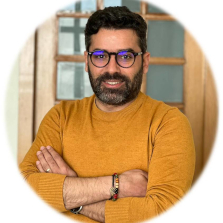
Melek Chaouch is a Tunisian scientist whose work is dedicated to advancing molecular biology, genomics, and bioinformatics research across Africa. His career, since earning a PhD in 2014, has been closely involved with major collaborative initiatives aimed at building scientific capacity on the continent. A significant focus of this work has been on enhancing data infrastructure and standardization. This includes contributions as a Node Ambassador for the pan-African H3ABioNet network and co-leadership in developing the African Population Ontology project, which seeks to create standardized frameworks for representing the rich diversity of African populations. These efforts are foundational to several ongoing large-scale projects that rely on robust data curation and management. He is currently involved with the African Genomics Data Hub, the Psychiatric Genomics Africa Consortium, and the Africa Biogenome Project. Within the African Bioinformatics Institute, his role co-chairing the training working group supports a collective mission to develop bioinformatics and data curation skills for the next generation of African scientists. This collective work reflects a shared commitment to strengthening scientific networks and fostering innovation in genomic data science across Africa.
Dr Melek Chaouch
Institut Pasteur of Tunisia, African Genomics Data Hub
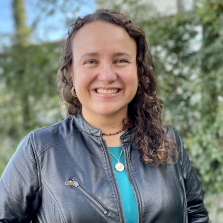
Dr. Mónica Muñoz Torres is an Associate Professor of Biomedical Informatics at the University of Colorado Anschutz; her work focuses on the critical challenge of developing the socio-technical foundations needed to realize the promise of artificial intelligence in biomedical sciences. Her expertise includes genomics, biocuration, knowledge representation, and data harmonization. She leads the NIH-funded Bridge to Artificial Intelligence (Bridge2AI)'s teams focused on Standards, Practices, and Quality Assessment, as well as Teaming and Collaboration. Dr. Muñoz Torres also co-leads the Clinical and Phenotypic Data Capture Workstream in the Global Alliance for Genomics and Health, responsible for the development of standards and tools to help the genomics community utilize phenotypic, clinical, and family health history information to improve human health. AI offers an unprecedented opportunity to uncover new insights in complex biomedical data. One of the biggest risks to achieving this is misunderstanding the most critical component: the data itself. While we rightly focus on the potential of new AI technologies, we often overlook that data sets alone are not ground truths. To build trustworthy AI, we must first establish trustworthy data. Dr. Muñoz Torres' work centers on defining the character of the data. Motivated by years of experience using comparative genomics to advance our understanding of human health and disease, she seeks to leverage her expertise under the light of artificial intelligence to improve socio-technical practices, foster research communities, and encourage participation from all professional backgrounds in genomics and biomedical informatics.
Dr Mónica Muñoz Torres
University of Colorado Anschutz
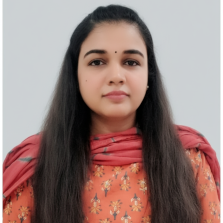
Dr. Nivedita Yadav is a Data Curator at the Indian Biological Data Centre (IBDC), India, specializing in Bioinformatics and Computational Biology. She holds a Ph.D. in Bioinformatics and Computational Biology from India and has interdisciplinary training that bridges biological sciences, computation, and data management. Her research and professional work focus on genomics, transcriptomics, and phenomics, with particular emphasis on biological data curation, metadata harmonization, and implementation of FAIR (Findable, Accessible, Interoperable, and Reusable) data principles. She is actively involved in the design and development of national-level biological data resources, contributing to initiatives such as BioVerse and structured phenome data repositories, which aim to improve data quality, interoperability, and long-term usability. Dr. Yadav plays a key role in developing data submission guidelines, standardized metadata templates, and quality-control workflows to support researchers in sharing reproducible and well-annotated datasets. In parallel, she is committed to capacity building and mentorship, promoting best practices in bioinformatics, scientific data management, and ethical research conduct through training, guidance, and collaborative engagement. Her broader academic vision is to strengthen India's biological data infrastructure while enabling seamless integration of indigenous biological resources into the global research ecosystem. Through her work, she contributes to advancing open science, data-driven discovery, and sustainable bioinformatics platforms that support translational and fundamental biological research.
Dr Nivedita Yadav
Indian Biological Data Centre (IBDC)
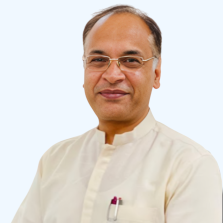
Dr. Saurabh Raghuvanshi is a Professor at Dept. of Plant Molecular Biology, University of Delhi South Campus, New Delhi. He has expertise in the area of plant genomics and bioinformatics and has carried out pioneering work in 'Big Data analytics' and Biocuration at national level. Recently, he led the development of the Indian Biological Data Center (IBDC), which is the first life science data repository of the nation. Earlier, he established and conducted genome level data analytics for sequencing and annotation of the rice genome, which was the first genome sequencing project of India. Further, whole genome assembly and annotation of Mycobacterium indicus pranii was also performed, again for the first time in India. The current focus of his group includes: Characterizing miRNA mediated molecular regulatory schema responsible for controlling stress response in rice. They are also focusing on multiomic characterization of biodiversity (medicinal plants) to enable conservation of adaptive plasticity and catalyse natural product based drug discovery.
Prof Saurabh Raghuvanshi
Indian Biological Data Centre (IBDC)