Building Skills, Confidence and Connections:
The Inaugural ABI Bioinformatics Summer School in Uganda
The Summer School represented an important milestone for ABI’s growing training programme. Designed for researchers who already had some exposure to bioinformatics but wanted to strengthen their ability to work independently with genomic data, the programme combined essential computational skills with specialised, research-focused genomic analysis.
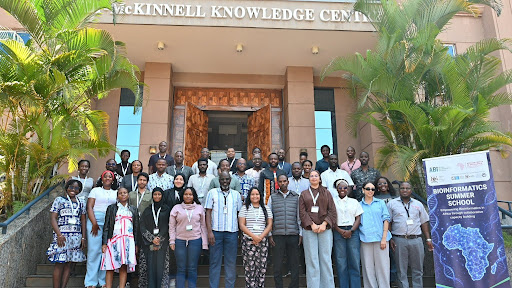
It also demonstrated the scale of demand for intermediate bioinformatics training on the continent. More than 800 applications were received for just 30 available places, with participants ultimately selected from institutions across Africa. The resulting cohort brought together researchers working across different disciplines, organisms, and research questions, creating an environment in which participants could learn as much from one another as from the formal curriculum.
From computational foundations to genomic analysis
The Summer School was deliberately structured around progression.
During the first week, participants strengthened the computational foundations required for modern genomic research. Training covered the Linux command line, high-performance computing (HPC), R programming, and next-generation sequencing workflows, with participants working directly within the HPC-enabled environment provided by ACE-Uganda.
These are increasingly fundamental skills for researchers working with genomic data. As biological datasets grow in size and complexity, researchers need to be able not only to understand bioinformatics methods conceptually, but also to navigate computational environments, manage analyses efficiently, troubleshoot workflows, and interpret their outputs.
The hands-on format of the Summer School was therefore central to its design. Rather than focusing primarily on lectures, participants worked directly with computational tools and datasets throughout the programme.
Week 1 was supported by trainers including Dr David Twesigomwe, Gloria Nakabiri, Ian Wasukira, Peter van Heusden, and Patricia Nabisubi, who guided participants through the core Linux, HPC, R programming, and introductory NGS components. Social-media reflections from the week highlighted the energy and curiosity of the cohort, as well as the confidence participants were beginning to build as they became more comfortable working in computational environments.
Moving into specialised genomics
With those foundations in place, the second week shifted towards more specialised application.
Participants divided into three parallel training tracks based on their research interests: Human Genomics, Pathogen Genomics, and Metagenomics. This allowed them to move beyond generic bioinformatics exercises and focus more deeply on approaches relevant to their own scientific questions.
The Human Genomics track was led by Dr David Twesigomwe from the MRC/UVRI & LSHTM Uganda Research Unit and Dr Musasula Sinkala from the University of Cape Town, with participants exploring approaches for studying human genetic variation and its relevance to health and disease.
In the Pathogen Genomics track, Shahiiid Kiyaga and Patricia Nabisubi from IDI/ACE-Uganda worked with participants on genomic approaches relevant to infectious-disease research and surveillance, including the use of genomic information to understand pathogen variation and evolution.
The Metagenomics track, facilitated by Ephifania Geza from the University of Cape Town and Alfred Ssekagiri from the Uganda Virus Research Institute, introduced participants to approaches for analysing complex microbial communities.
Importantly, the specialised tracks remained strongly application-focused. Participants worked with real-world genomic datasets, putting the computational skills developed during the first week into practice and progressing towards analyses that more closely resembled the challenges they encounter in their own research.
Building more than technical skills
While developing technical expertise was the immediate objective of the Summer School, the two weeks in Kampala also created something equally important… Connections.
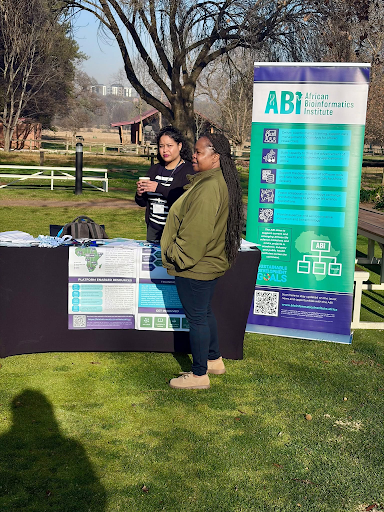
ABI connects with Africa’s landscape genomics community at ALGAC 2026
Photo credit: ALGAC 2026 Media TeamBuilding Connections Across Genetics and Bioinformatics: ABI at SASBi–SAGS BIO2026The African Bioinformatics Institute (ABI) recently exhibited at the inaugural African Landscape Genomics Annual Conference (ALGAC) 2026, held from 27–29 July 2026 in Centurion, South Africa.Hosted by Tshwane University of Technology, ALGAC brought together researchers, students,…
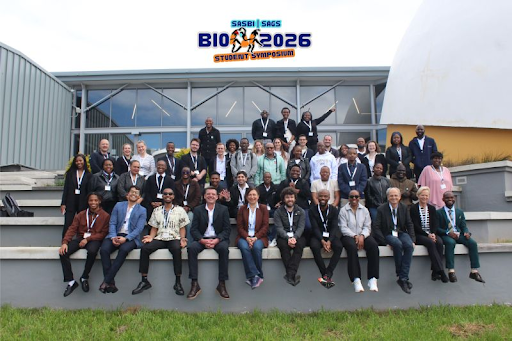
Building Connections Across Genetics and Bioinformatics: ABI at SASBi–SAGS BIO2026
Building Connections Across Genetics and Bioinformatics: ABI at SASBi–SAGS BIO2026The SASBi–SAGS 2026 conferences brought together students, researchers and professionals working across genetics, genomics and bioinformatics, creating a space for scientific exchange and new connections.For the African Bioinformatics Institute (ABI), the events were also an opportunity to connect with members of…
Harnessing Plant Genomics for Africa’s Crops: ABI Supports Plant Pangenome Workshop
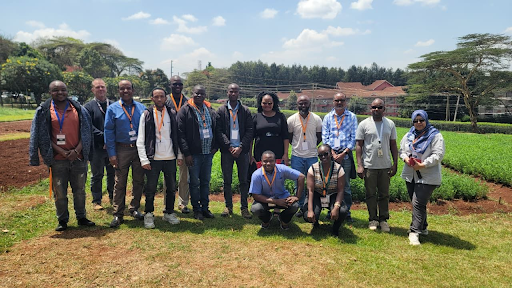
Harnessing Plant Genomics for Africa’s Crops: ABI Supports Plant Pangenome WorkshopHow can genomics help develop crops that are more productive, resilient and suited to Africa’s diverse growing environments? This was at the heart of the Plant Pangenome Workshop, held from 31 August to 4 September at the International Institute of…
Strengthening Africa’s Genomics Ecosystem: ABI at the CoGSAYR Africa Summit 2026
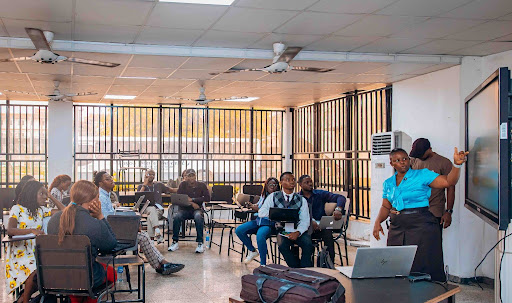
Strengthening Africa’s Genomics Ecosystem: ABI at the CoGSAYR Africa Summit 2026More than 200 young scientists, researchers and established experts gathered in Lagos, Nigeria, for the CoGSAYR Africa Summit 2026 (29-31 January), united by a shared ambition: to advance genomics and bioinformatics across Africa.For the Consortium of Genomics Students and Young…
Building Tunisia’s Bioinformatics Community: ABI Supports First Tunisian Bioinformatics Conference
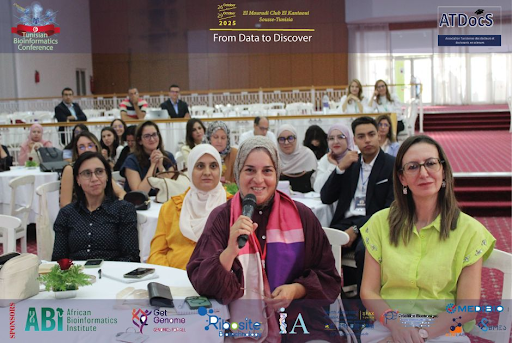
Building Tunisia’s Bioinformatics Community: ABI Supports First Tunisian Bioinformatics ConferenceThe first Tunisian Bioinformatics Conference, held from 26–29 October in Sousse, marked an important milestone for Tunisia’s growing bioinformatics community.Organised by ATDOCS, the four-day conference brought together researchers, students, clinicians, industry representatives and technology specialists to explore the evolving role of…

ABI Partners in £10M GEN-IMPACT Africa-Led Genomics Programme
The African Bioinformatics Institute (ABI) is a partner alongside the African Population Cohorts Consortium (APCC) and the Science for Africa Foundation (SFA Foundation), in GEN-IMPACT

Call for Applications: ABI Group Leaders
The African Bioinformatics Institute (ABI) is now accepting applications for Group Leaders. These positions are open to senior bioinformatics researchers
Showcasing the African Bioinformatics Institute at the DS-I Africa Consortium Meeting
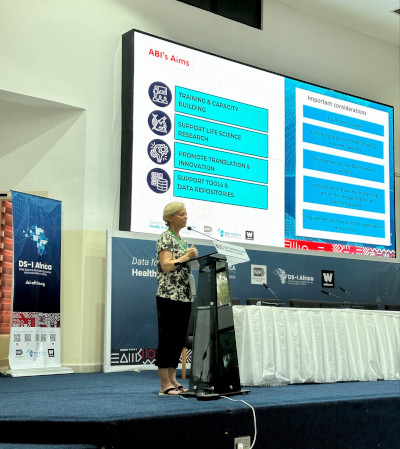
On 28 August 2025, the African Bioinformatics Institute (ABI) held a showcase session at the 5th Annual DS-I Africa Consortium Meeting, hosted at the CEDI Conference Centre at the University of Ghana in Accra.

Building the African Bioinformatics Institute: Key Updates from the July Information Session
The African Bioinformatics Institute (ABI) continues to take shape through a series of structured stakeholder engagements. At the most recent information session
Home-grown solutions: The need for African approaches to African problems
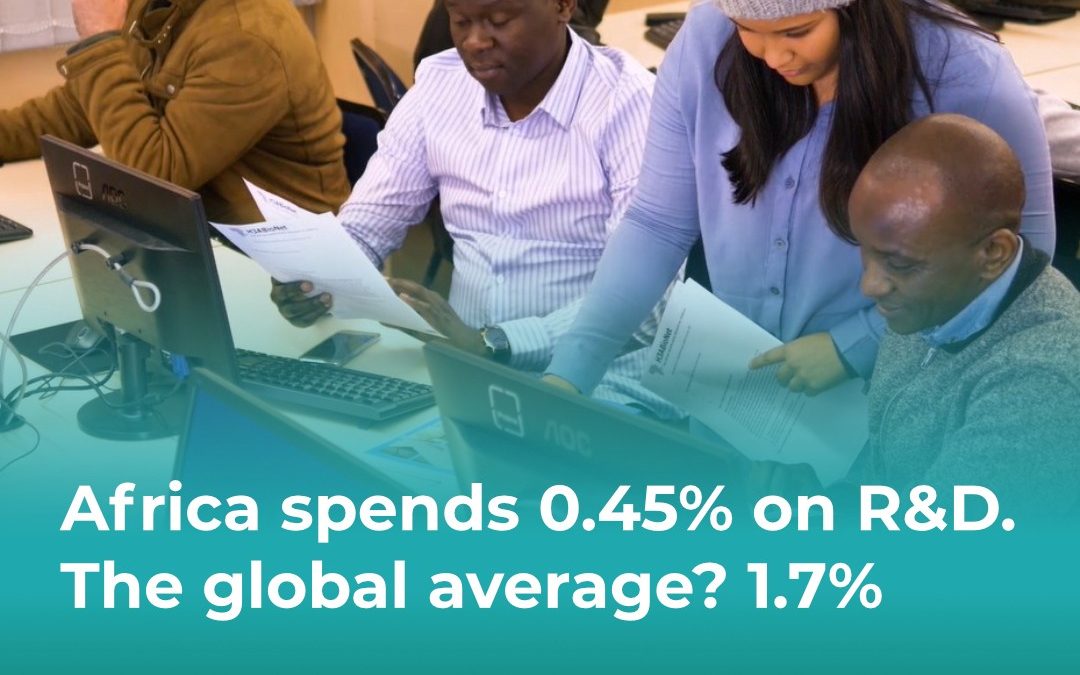
Africa accounts for nearly 19% of the global population, yet produces around 3% of the world's scientific research. The real-life implications are vast and